
Data Cabling in Toronto and the GTA, done properly the first time
Cablify is a commercial data cabling contractor working across Toronto, Mississauga, Vaughan, Brampton and the wider GTA. We design, install, terminate, test and document structured cabling for offices, warehouses, schools, clinics, retail sites and new construction.
You deal with the people doing the work. No sales layer, no subcontracting the job to whoever is cheapest that week. Every drop is tested with a Fluke certifier, every job comes with a test report, and complete systems can be registered for a 25 year manufacturer warranty.
Whether you need twelve drops added to an existing office or a full floor cabled before a move-in date, the standard is the same.
Tell us the building and the drop count. We will walk the site, confirm the pathway, and give you a firm price.
1-647-846-1925
Local 647-846-1925 · Mon to Sat, 8am to 8pm
Structured data cabling for offices, warehouses and commercial sites across the GTA. Design, installation, certification and documentation.
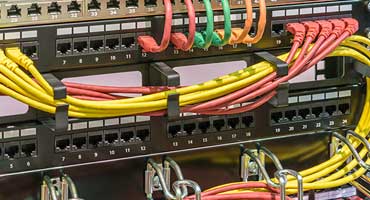
Cat6A, Cat6 and Cat5e installation and termination using Belden, Panduit and Corning components, backed by a 25 year manufacturer warranty.

Fiber optic backbone, terminations, fusion splicing and OTDR testing for runs that exceed the 100 metre copper limit.

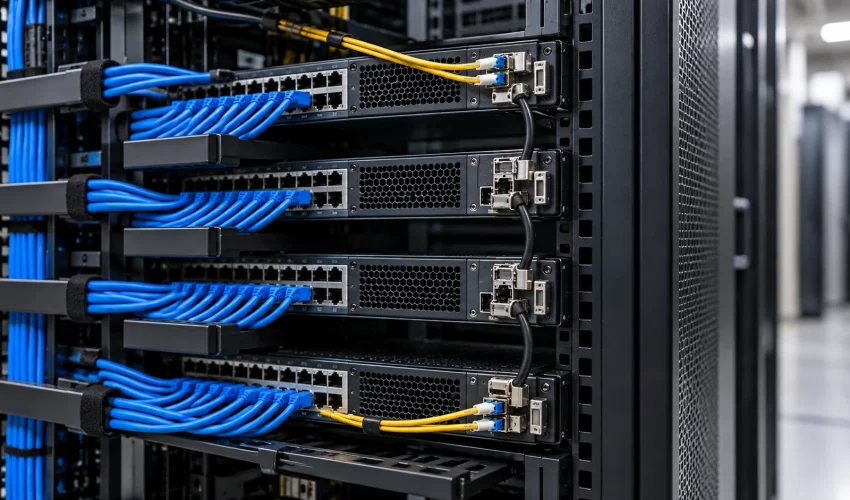
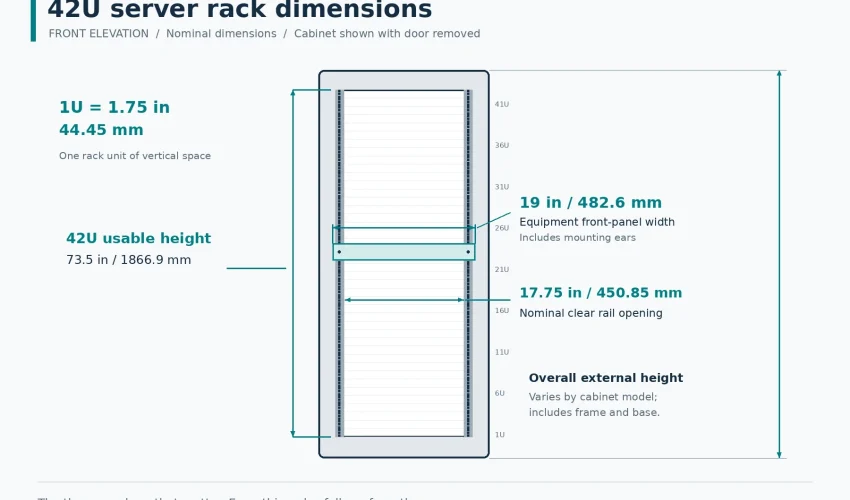
Server room and telecom closet build-outs. Racks, cabinets, patch panels, cable management, grounding and clean cross connects.
Commercial CCTV installation and camera maintenance. IP cameras, NVRs, PoE cabling and remote viewing across the Toronto area.

Access control from card readers and mobile credentials to biometrics, including all the low voltage cabling behind it.

What Data Cabling Actually Covers
“Data cabling” gets used loosely. On a commercial job it means a structured cabling system, and a structured system has parts that have to be designed together. Getting one of them wrong is what causes the problems people call us about two years later.
Horizontal cabling
The runs from the telecom room out to each outlet. This is the bulk of any job and the part that decides how long your cabling stays useful. Copper is limited to a 100 metre channel, which in practice means a 90 metre run plus patch cords.
Backbone cabling
The links between telecom rooms, between floors, and from the entrance facility. Usually fiber, sometimes copper on smaller sites. This is what stops a large building from needing impossible horizontal runs.
Telecom rooms
The MDF and any IDFs. Racks or cabinets, patch panels, cable management, power, grounding and bonding. A well built room is why the next technician can work in it. A bad one is why nobody wants to touch it.
Work area outlets
Jacks, faceplates, floor boxes, poke-throughs and furniture feeds. The visible end of the system, and the part that gets moved most often as offices reconfigure.
Pathways and supports
J-hooks, cable tray, conduit, sleeves and firestopping. Pathway capacity is what determines whether you can add drops later without opening ceilings. It is also the thing most quotes leave out.
Testing and documentation
Certification of every run, labelling at both ends, an as-built record and a port map. Without it you own a building full of unlabelled cable and no way to prove any of it works.
Which Cable For Which Job
Most clients ask us to just pick. Here is how we actually decide.
| Cable | Speed and distance | When we specify it |
|---|---|---|
| Cat5e | 1 Gigabit to 100 m | Repairs and additions to existing Cat5e systems. We no longer recommend it for new commercial installs. |
| Cat6 | 1 Gigabit to 100 m, 10 Gigabit to 37 to 55 m | The volume standard for small and mid sized offices with gigabit desktops and shorter runs. |
| Cat6A | 10 Gigabit to the full 100 m | Wi-Fi 6E and Wi-Fi 7 access points, high wattage PoE, long runs, new builds, and anywhere a consultant has specified it. |
| Fiber | Well beyond 100 m | Backbone between floors, between buildings, and any run copper cannot reach. Does not carry power. |
Two things worth knowing before you compare quotes.
A channel performs to its weakest component. Cat6A cable terminated into Cat6 jacks gives you a Cat6 channel. If a quote lists a cable grade but not matching jacks, panels and patch cords, it is not that grade of install.
Most buildings need copper and fiber. Fiber between the closets, copper from each closet out to the devices. A quote that offers only one is usually missing something.
Our Data Cabling Services
These are the pieces we get called for. Most projects combine two or three of them.
New office and warehouse cabling
Complete builds from telecom room to outlet. Pathway, cable, jacks, faceplates, patch panels, dressing, labelling and certification. Twelve drops or a full floor, same standard either way.
Cabling for office moves and fit-outs
New space cabled and tested before your move-in date, coordinated with the landlord, the general contractor and your IT provider. This is the work with the least room for schedule slip, and we plan it that way.
Adding drops to an existing system
Extra desks, a new meeting room, a machine that needs a wired connection. We match what is already there, label it to your existing scheme, and test it like any other job.
Wireless access point cabling
Drops to ceiling and wall mounted APs, sized for the multigig uplinks that Wi-Fi 6E and Wi-Fi 7 hardware expects. Mounting, PoE capable runs, and coordination with your wireless survey.
Voice and phone cabling
Traditional phone lines, VoIP over the data network, demarc extensions and analogue runs for fax, elevators, fire panels and alarm lines that still need copper.
Server room and telecom closet build-outs
Racks and cabinets, patch panels, vertical and horizontal management, power distribution, plywood backboards, grounding and bonding, and cross connects the next technician can read.
Testing, certification and fault finding
Fluke certification with a report per drop. We also get called to trace unlabelled runs, diagnose intermittent drops, and re-terminate work that was never properly tested.
Cable removal and clean-up
Abandoned cable is a fire code issue and it fills the pathways you need for new runs. We remove dead cable and re-dress messy rooms rather than working around them.
CCTV and access control cabling
Cameras, door controllers, readers, intercoms and PoE lighting run on the same structured system, by the same crew, on the same schedule. One contractor instead of three.
Multi-site rollouts
One standard held across every location. Same materials, same labelling scheme, same test documentation, whether the site is in Scarborough or Calgary.
Most clients call us with a floor plan and a rough idea. We walk the site, check the pathways, and tell you what the building actually needs. Site walks are free and there is no obligation attached to one.
Who We Cable For
Offices and multi-tenant floors
The bulk of our work. Fit-outs on leased floors, upgrades driven by a switch refresh, and ongoing moves and changes as teams grow. We work with landlords and property managers on freight access, hoarding and after hours windows.
Warehouses and distribution
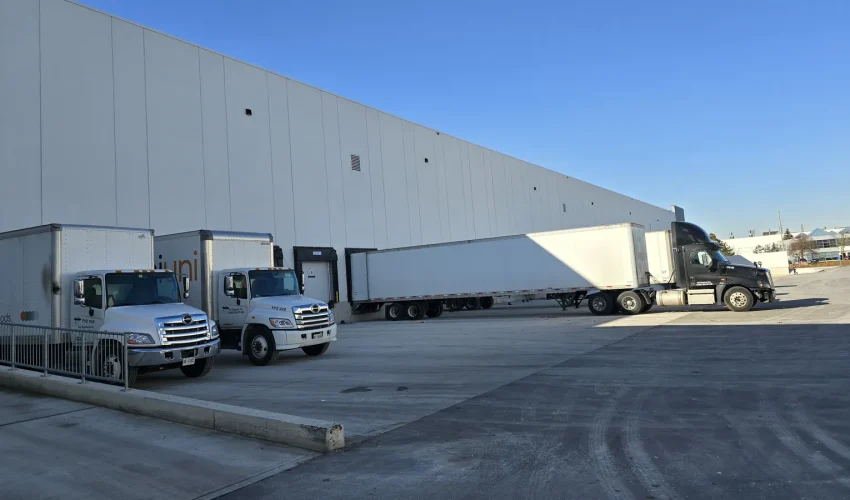
Long spans, high ceilings, scan guns that cannot drop signal, cameras across the floor. Cable tray on structure, multiple IDFs so no run exceeds 90 metres, and work planned around active picking.
Schools and campuses
Classroom access point density, display and door hardware drops, and schedules built around the academic calendar rather than against it.
Clinics and healthcare
Nurse call, patient monitoring, imaging areas and administrative floors. Infection control and containment protocols on occupied clinical space, and documentation packages consultants will accept.
Retail, hospitality and restaurants
POS, Wi-Fi, cameras, music and signage on one system. Usually overnight so the doors open on time, and usually across several locations at once.
New construction and industrial
Rough-in at framing coordinated with the other trades, then trim out and certification ahead of occupancy. On production floors, shielded cable and conduit where electrical noise demands it.
Hold this next to a competing quote. If something below is missing from theirs, that is where the price difference is hiding.
Materials
- Cable in the correct grade and fire rating for the building
- Matching jacks, faceplates and surface boxes
- Patch panels, 24 or 48 port
- Patch cords at both ends
- J-hooks, cable tray, conduit and supports
- Firestop assemblies at rated penetrations
- Belden, Panduit or Corning components
Labour
- Site walk and pathway assessment before pricing
- Pull, support and dress to standard
- Termination at panel and outlet
- Rack, panel and cable management installation
- Firestopping and pathway penetrations
- Removal of abandoned cable where in scope
- Cleanup and ceiling tile reinstatement
Handover
- Fluke certification on every drop
- Test report per run, PDF and native format
- Labelling to a consistent scheme at both ends
- As-built drawing or drop schedule
- Patch panel port map
- Manufacturer warranty registration where applicable
- A named contact for callbacks
Recent Data and Voice Cabling Work
Hundreds of completed data and voice cabling installations across the Greater Toronto Area, from twelve drop offices to floors serving over 500 users. Same crews, same standard, same documentation on every one.

DATA CABLING SPECIALISTS
Why clients keep calling us back
We have completed hundreds of data and voice cabling installations across the GTA, including sites serving more than 500 users. Our technicians are certified, insured, and used to working in occupied buildings without becoming a problem for the people in them.
We install Belden, Panduit and Corning components, and where a system is built end to end from a single manufacturer we register it for a 25 year manufacturer warranty. Every drop is certified and every job is documented, so five years from now somebody can still find out where a cable goes.
You deal with the installers
No sales layer between you and the crew, and no handing your job to a subcontractor you never met.
After hours and emergency work
Nights and weekends in occupied buildings, and 24/7 response when a cabling fault takes something critical offline.
Every drop tested and documented
Fluke certification, a test report per run, labelling at both ends and an as-built record you keep.
Priced from a site walk, not a guess
We look at your pathways before quoting, so the number in the proposal is the number on the invoice.
Get a Quick Quote
Send us your details and a short description of the job. Include a floor plan and a drop count if you have them and we will come back with a range the same day.
How We Keep Installations To Standard
Most cabling problems are not exotic. They come from the same handful of shortcuts, and avoiding them is mostly discipline rather than skill.
Design before pulling. Closet locations, run lengths and pathway capacity get settled on paper first. Discovering a 110 metre run halfway through a pull is expensive.
Correct fire rating for the space. FT4 for general commercial and riser, FT6 where cable passes through a return air plenum. In most Toronto office towers the ceiling void is a plenum, which means FT6. We confirm it on the walk instead of assuming.
Matched components throughout. The cable, jacks, panels and patch cords all sit at the same grade. Mixing grades quietly downgrades the whole channel.
Separation from electrical. Copper picks up interference from power runs, motors, fluorescent ballasts and VFDs. Maintaining separation, or using shielded cable and bonding it properly where separation is not possible.
Service loops at both ends. Extra slack coiled in the ceiling and at the panel, so a small furniture change does not mean a new pull.
Pull tension and bend radius respected. Overstretched cable and tight bends cause failures that are invisible until a tester finds them, or until a device starts dropping packets a year later.
Coverage Area
Our crews cover Toronto, North York, Scarborough, Etobicoke, Mississauga, Brampton, Vaughan, Markham, Richmond Hill, Oakville, Burlington, Hamilton, Ajax, Pickering, Whitby, Oshawa, Barrie, Kitchener, Waterloo, Guelph and the Niagara region.
We also work in Ottawa and Montreal for clients running multiple Canadian sites, and cover several US markets through cablify.com.
We have dedicated pages for several of these markets:
- Network cabling Mississauga
- Data cabling Brampton
- Network cabling Oakville
- Network cabling Hamilton and Burlington
- Network cabling Kitchener Waterloo Cambridge
If you are running a rollout across several sites and need one contractor holding the same standard everywhere, that is work we do regularly.
Data Cabling Questions We Get Asked
How much does data cabling cost per drop in Toronto?
We do not publish a per drop price, because the same drop can differ by a factor of three between two buildings on the same street. Ceiling type is the biggest factor. Open ceiling is quick, T-bar is slower, hard lid drywall means cutting and patching. After that it is cable grade and fire rating, run length, whether conduit or core drilling is needed, firestopping, after hours access, and volume. Send a floor plan and a drop count and we will give you a realistic range on a ten minute call.
How long does a data cabling job take?
A 20 to 30 drop office with an open ceiling is usually two to three days including termination and certification. A full floor of 150 to 200 drops with hard lid ceilings and firestopping runs one to two weeks. Occupied space and after hours restrictions stretch that. You get a schedule with the quote rather than after the job starts.
Can you work while our office is occupied?
Yes, and most of our work is exactly that. We stage the job so nobody loses connectivity, keep the work area contained, put ceiling tiles back at the end of each day, and clean up. Where the space cannot be disturbed at all we work nights and weekends. That changes the rate and we say so in the quote rather than discovering it later.
We are moving offices. When should we book cabling?
As early as you can, and before the ceiling closes if there is construction. The cabling has to be in and tested before your IT provider can set up switches and Wi-Fi, which has to happen before your staff arrive. Booking it late is the most common reason a move-in date slips. We are happy to sit in a planning call with your GC and IT provider to work backwards from the date.
Who owns the cabling in a leased space, us or the landlord?
It depends on your lease, and it is worth checking before you spend. In most GTA commercial leases the tenant pays for and owns cabling installed inside their premises, but it often becomes a leasehold improvement that stays with the space at the end of the term. Some landlords also require abandoned cable to be removed when you leave. We can quote both the install and the eventual removal so there are no surprises.
What is the difference between Cat5e, Cat6 and Cat6A?
Cat5e carries 1 Gigabit to 100 metres. Cat6 carries 1 Gigabit to 100 metres and 10 Gigabit over a shorter distance, roughly 37 to 55 metres depending on how tightly it is bundled. Cat6A carries 10 Gigabit over the full 100 metres and handles high wattage PoE better. For most new commercial work the choice is between Cat6 and Cat6A, and it comes down to run length, access point requirements and how long you want the cabling to last.
Do we need fiber, or is copper enough?
Most buildings need both. Copper stops at 100 metres, so anything longer, anything between floors, and anything between buildings is fiber. Copper carries power over Ethernet, which fiber cannot, so devices like cameras, access points and door hardware stay on copper. A typical GTA project is fiber between telecom closets and copper from each closet out to the devices.
Do you certify the cabling and provide test results?
Yes. Every drop is certified with a Fluke tester to the relevant TIA limits, and you receive a report for every run along with an as-built record and a patch panel port map. A continuity check with a cheap wire map tester is not certification, it does not prove the run will carry the speed you are paying for, and it does not qualify for a manufacturer warranty.
Can you take over a job another contractor started or left unfinished?
Regularly. We test what is there, tell you which drops pass and which do not, and give you a repair scope rather than a blanket recommendation to replace everything. Sometimes it is re-termination and new patch cords. Sometimes the pathway was wrong from the start. You get the test data either way and you decide.
Can you also handle our cameras, access control and phones?
Yes, and doing it together is usually cheaper and faster than coordinating separate trades. Cameras, door controllers, readers, intercoms and phone runs all use the same structured cabling, the same pathways and the same crew. One schedule, one point of contact, one set of documentation at the end.
Do you take small jobs, or only full floors?
Both. We add a handful of drops to existing systems and we build out entire floors. Small jobs get the same materials, the same certification and the same documentation. The only difference is the schedule.
Are you licensed and insured?
Yes. We carry liability insurance and WSIB coverage, and we can provide certificates for your landlord or property manager before we start. Most downtown buildings ask for them, so we usually have them sent across before the first site visit.
What Our Clients Say
Our testimonials reflect our work and our commitment to quality and client satisfaction.
News, Tips and Guides
Guides and articles on data cabling, fiber, network hardware and building infrastructure.

Ready for a cabling quote?
Free onsite estimates across the GTA. Send us a floor plan and a drop count, or just call and describe the space.